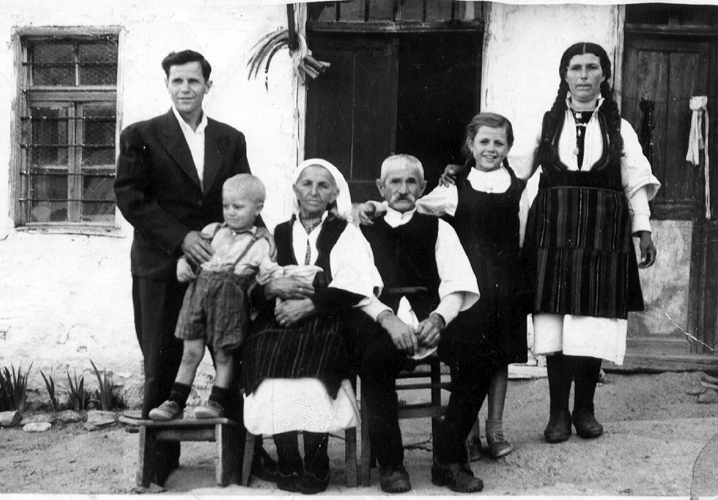
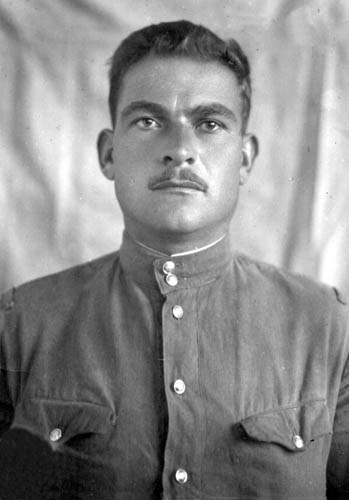
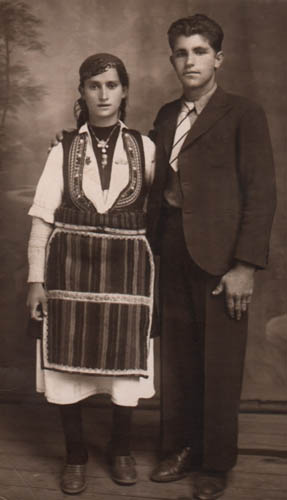
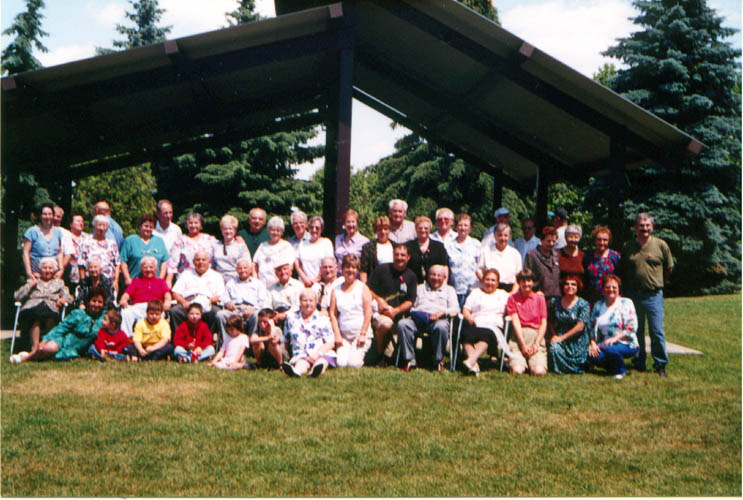
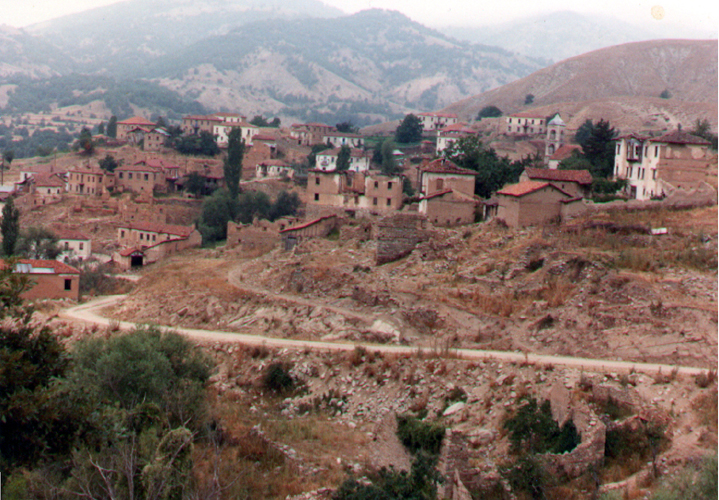
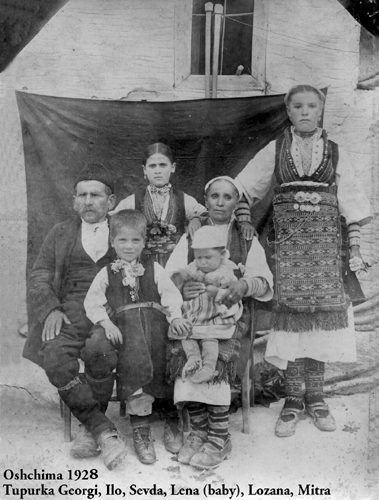
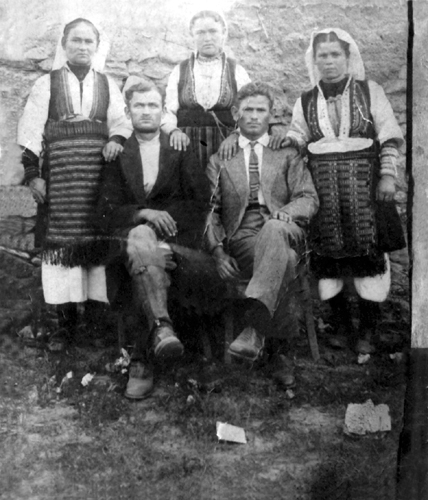
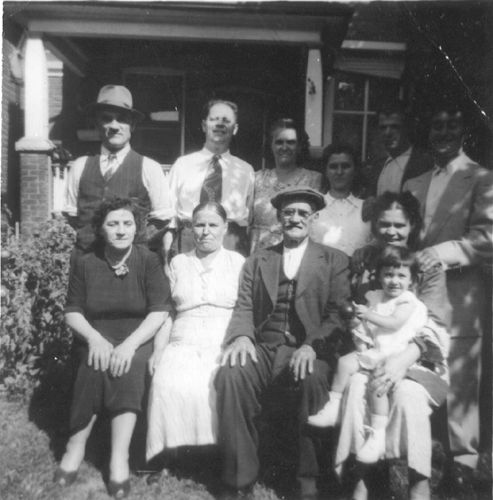
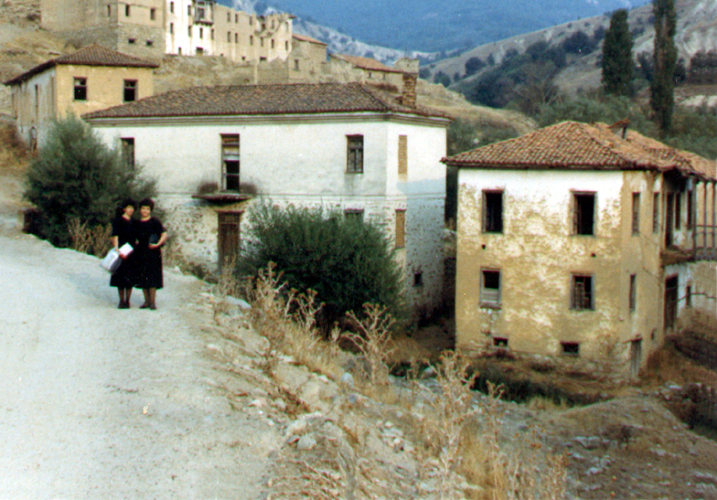
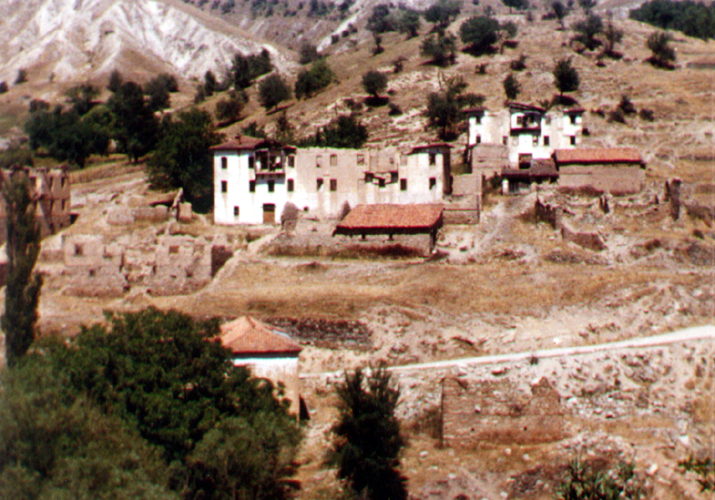
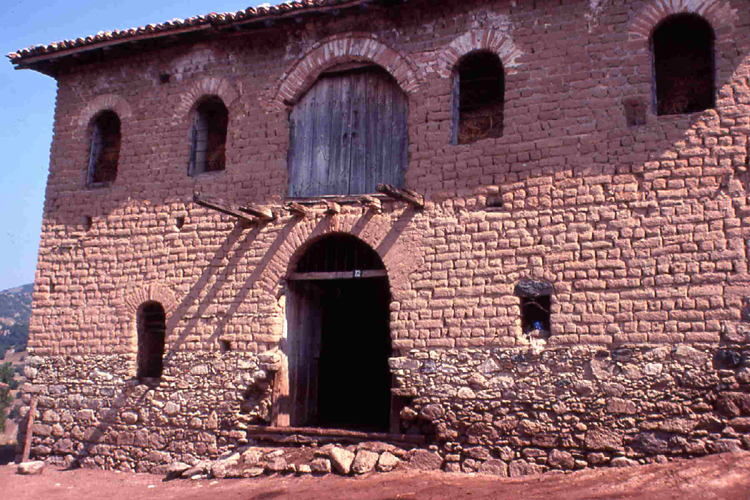
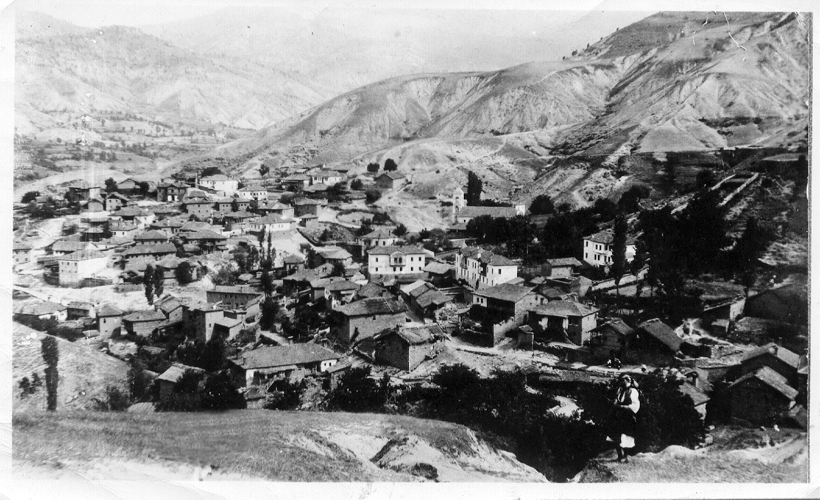
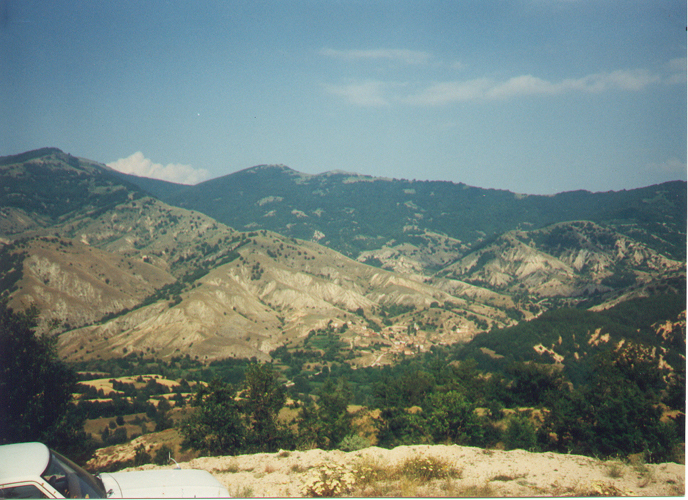
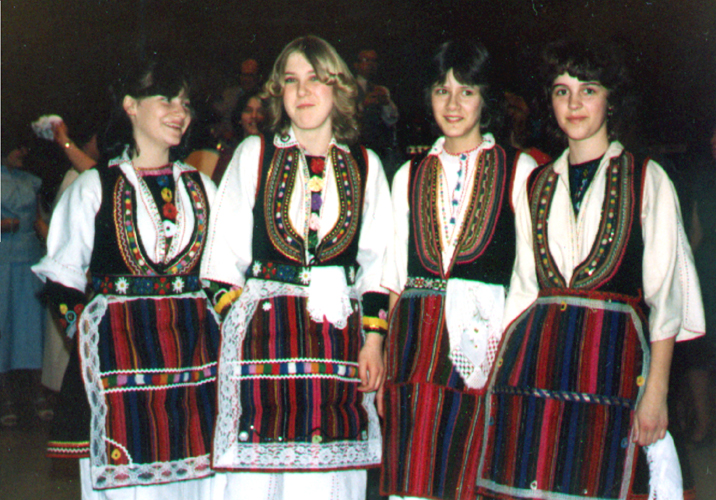
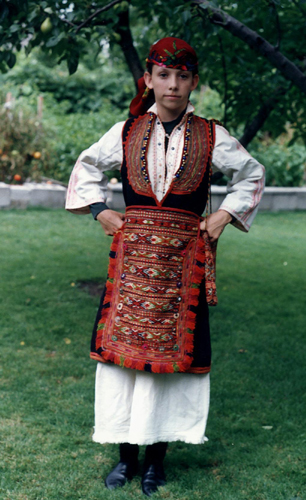
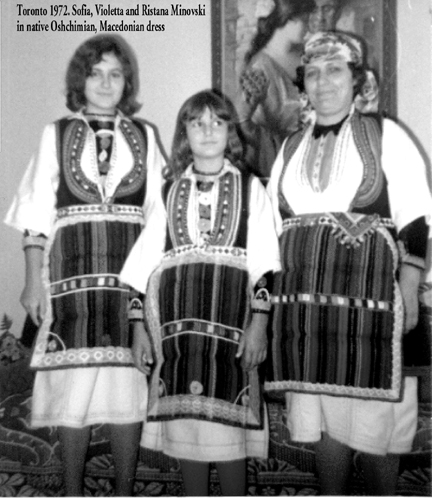
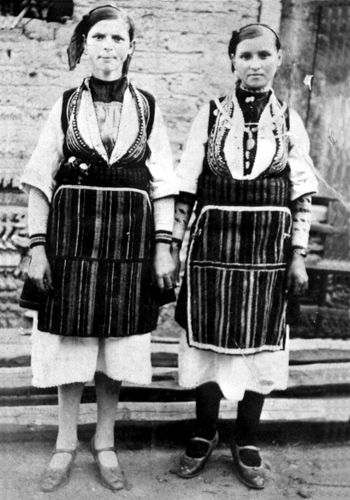
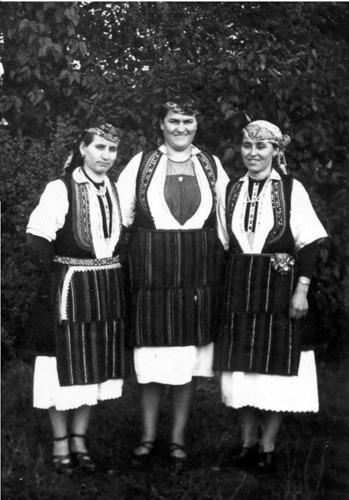
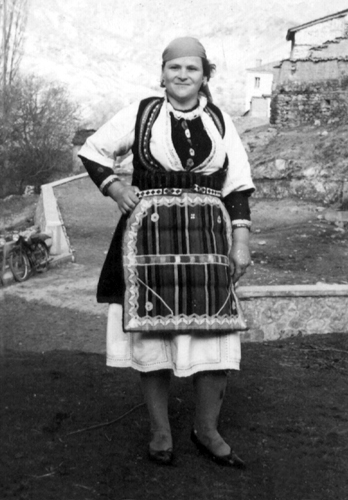
The village Oshchima is located between the cities of Lerin and Kostour at the Prespa-Lerin intersection near the source of the river Bistritsa in north western Aegean Macedonia. The village lies at an elevation of 1020 meters above sea level and is nestled between Mount Bigla on the north, Mount Gomnoush on the east and by Mounts Lokma and Bodantsa on the west. To the north Oshchima borders the villages Zhelevo and Psoderi, to the east, Trsie and Statitsa, to the west, Besfina and Prespa and to the south Trnaa.
It has been said that the first inhabitants of Oshchima were Macedonian nomads who drifted from other parts of Macedonia and settled there. It is unknown how old the village is but families can be traced back to the beginning of the 18th century. By the turn of the 19th century 36 family groups (approximately 200 people) were living there.
The original settlers built their homes all throughout the Oshchima region and were isolated from each other. Living apart, they found themselves defenceless against raiding bandits and were forced to abandone their old houses and build new ones closer together.
According to legend, on a rainy Easter day a long time ago a gang of bandits sacked Oshchima. The gang savagely attacked the village, burned down the houses and left many dead. The survivors, fearing for their lives, ran into the forested mountains and hid under an overhanging rock. Feeling secure in the forest they enjoyed the comfort of the rocky ledge and spent the rest of the day praying for their safety. Many felt that the experience touched them spiritually and gave them courage to go on. With time the rock became a symbol of strength for the Oshchimian community that commemorated the courage and bravery of the Oshchimian spirit.
After the community recovered from the raid and began to grow, small groups of people migrated deeper into the thickest woodland plots and began to build a new community, which later became the ancestral foundation of the present day village.
Some years later, the same gang of bandits came back and were astonished to see a thriving community. After looting the village again they carried off as much as they could. On their way they met another group of bandits who were disappointed with their booty pillaged from other villages. Satisfied with their own findings the original bandits directed the new bandits to 'go there, there is plenty more' which in Macedonian translates to 'odite tamo, oshche ima'. In time, the village of plenty became known as OSHCHIMA from OSHCHE-IMA.
Legend has it that in the year 1465 the old Oshchimian settlers built their first 'Pravoslavna' (Old Christian Orthodox) church (tsrkva) in the middle of the present day Oshchima cemetery. The church was very small approximately 22 square meters (or laka) in size and dedicated to Sveti Jovan.
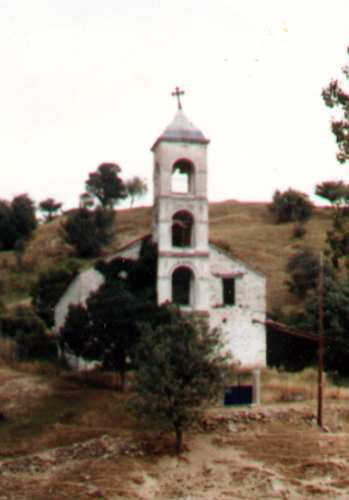
In 1867 the people of Oshchima constructed a bigger and more modern Christian Orthodox Church and dedicated it to Sveti Nikola, the patron saint of children and of sailors. The church was built near the old cemetery and took nearly ten years to complete. In 1911, with some financial help from Benefit Society Oshchima in Toronto, a new belfry was added.
Before there was Patriarchist or Exarchist influence, Sveti Nikola was a Macedonian Church where service was conducted in the Macedonian language, by Macedonian priests. On May 20th of each year Oshchima threw a huge celebration to honour its patron saint. This was a community affair that included outdoor music, dancing and plenty of food and drink. May 20th was chosen for its good weather, best suited for this outdoor event. In addition to every Oshchimian, relatives and friends from the neighbouring villages such as Besfina, Trnaa, Rula and Zhelevo were also invited to participate in the event. Each family was more than glad to play host to as many visitors as they could accommodate. Everyone was welcome. Every year on December 6th the village also celebrated the namesake Svety Nikola. This time however, visits were made to families with family members named Nikola.
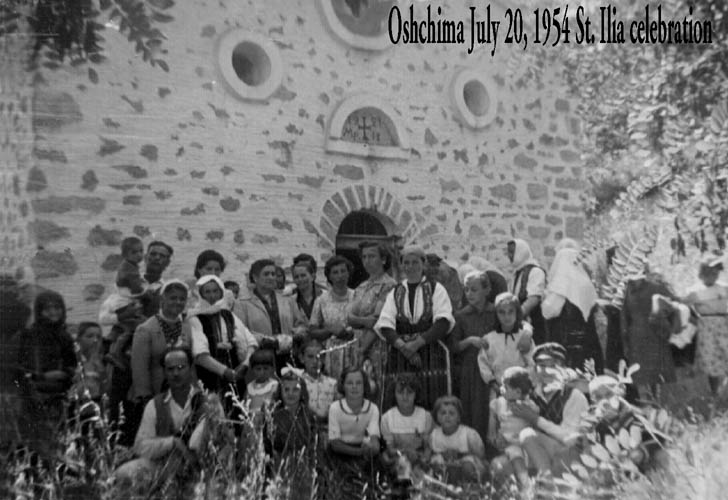
Around the turn of the 20th century, Oshchimians built a second church. The idea came about after several people reported strange and unexplained phenomena in the woods of Osoi. One reported hearing crying voices, another saw floating lights, and another saw a large icon appear and disappear. These phenomena, by some, were interpreted as divine manifestations and the village elders were persuaded to declare the area holy. In 1921, a Christian Orthodox monastery, in honour of Svety Ilia, was built on the very same spot. Since then, every year on July 20th the village hosted one of its biggest celebrations, second only to Sveti Nikola.
By comparison, Sveti Ilia was a modern brightly-lit church with many large windows. Sveti Nikola on the other hand, had a much darker interior with tall, narrow windows high above the floor. Sveti Nikola was built during the Turkish era with security in mind. The need for strong security was also reflected in the thickness of the steel-hinged hardwood door, designed to guard against forceful entry.
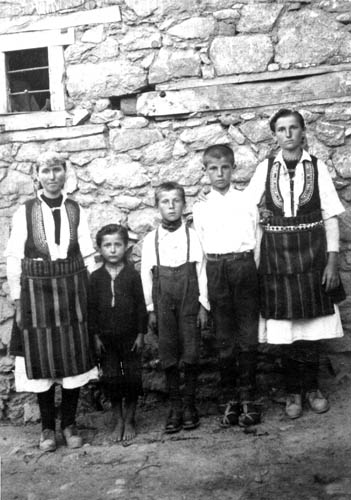
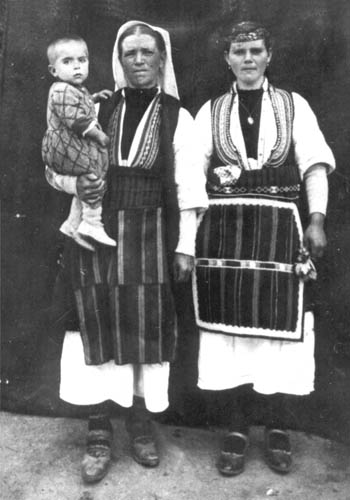
By 1939 the population of Oshchima had grown to approximately 600 residents, consisting of 114 families. An elected committee of village elders and a mayor managed village affairs, social work and civic duties. Volunteers organized and did most of the community work, each family giving five days of service a year for repairing bridges, water canals, and roads. In addition to dealing with civic matters, the elected committee was also consulted on legal matters. Only after all avenues were exhausted did Oshchimians consult lawyers and the courts. Honour, self sacrifice and honesty were encouraged and played a substantial role in the lives of each Oshchimian, compensating for the harsh economic conditions brought on by the villages' poor topology and the regional political climate. Residents were compelled to work extra hard in order to survive.
Under Turkish rule, Oshchimians and Macedonians alike had some freedom of choice in choosing their schools, culture, religion, traditions, and language. As long as they did not interfere with the affairs of the Turks and paid their taxes, the Turkish authorities usually looked the other way. Macedonians didn’t like being occupied but after five hundred years it was accepted as another burden to bear in their daily lives.
Life became even harsher after the 1912-1913 Balkan wars. The Greek occupation put an end to all that was Macedonian. Greek policies of forced assimilation erased the Macedonian language and abolished long-standing Macedonian traditions, even in small villages like Oshchima. Place names and buildings alike were given Greek names. The Svety Nikola Church, the most cherished Oshchimian possession, was re-named Agios Nikolaos. All the Macedonian writing in the church was erased, including the names of the saint on the icons and the names of the dead on the gravestones. The Macedonian writing on the civic building and stone markers was also erased and replaced with a Greek equivalent. The village was renamed Trigonon which had absolutely no historical significance or meaning for the tradition bound Oshchimians. People’s names were also changed and Boris was renamed Vironos, Trpo became Trifunas, Kita became Stavroula and Slava became Evdoxia. The city of Lerin became Florina, Voden became Edessa, and so on.
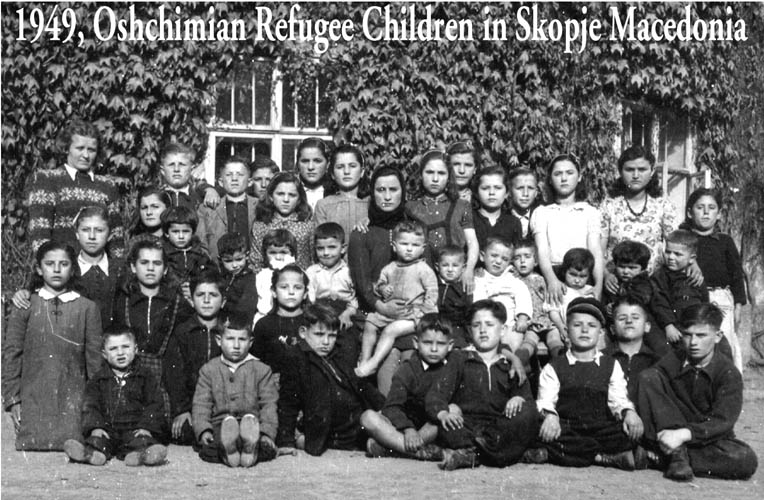
From inhabiting 600 residents in 1939 (pre-World War II), Oshchima shrank to 92 people when the Greek Civil War ended in 1949. As of March 1970, there were only 8 of the original Oshchimians left living in Oshchima. The political climate became so oppressive after the Greek Civil War that most Oshchimians chose to leave their beloved country rather than put up with the Greek oppression.
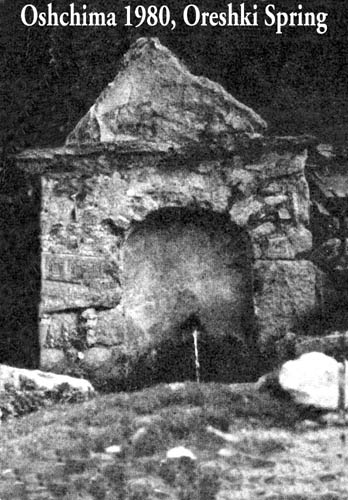
Even though Oshchimians were forcibly uprooted from their birthplace, they will never forget the wondrous sights of Gomnoush, Tumba and Oreshky. Those Oshchimians who were born, raised and lived in Oshchima will always have wonderful memories to remind them of their love for Oshchima, family and community.
by Risto Stefov